Kovai Vidyashram

Author: admin

Teachers day

Teachers’ Day Speech & Essay Ideas for CBSE Students (2026)

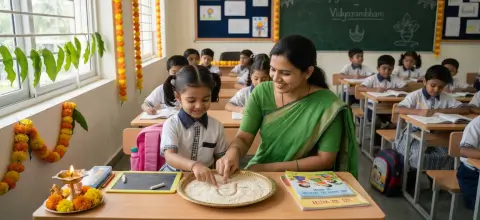
Teachers’ Day Speech & Essay Ideas for CBSE Students (2026) Summary Teachers Day 2026 falls on September 5, and every CBSE student deserves to mark it meaningfully. This guide offers speech and essay ideas, structures, and opening lines that help students express genuine gratitude, stand out on stage, and create a tribute their teachers will actually remember. Introduction September 5 arrives every year, and across CBSE school classrooms in India, students face the same quiet challenge: how do you say something meaningful about a person who has shaped your thinking and shown up for you every single day?  Teachers Day 2026 is an opportunity to do exactly that, and doing it well takes more than memorising a generic paragraph from the internet. This guide gives CBSE students practical speech structures, essay frameworks, and opening lines that feel personal and genuine. Whether you’re addressing your full school assembly or writing a heartfelt essay, here’s everything you need to make September 5 count this year. What Are the Best Speech and Essay Ideas for Teachers Day 2026? The best Teachers Day 2026 speech and essay ideas start with one thing most students overlook: a specific memory. Not a generic compliment like “teachers work very hard,” but a real moment that actually happened and actually mattered. Think about the teacher who stayed back after class to explain a concept you’d been too embarrassed to ask about again. Or the one who wrote a single encouraging word on your notebook that you still remember. Those specific moments carry far more emotional weight than any polished paragraph ever could. A Teachers Day speech ideas for students approach that begins with a real memory immediately connects with the audience in a way that a rehearsed opening line never will. Start there, and the rest of the speech builds naturally from that foundation. How Do You Structure a Strong Teachers Day Speech for a School Assembly? A strong short speech on Teachers Day follows a simple three-part structure: an opening that grounds the audience in a shared feeling, a middle that honours the specific qualities of teachers, and a close that leaves the audience with something to carry forward. Opening (30 seconds): Begin with a question or bold statement rather than “Good morning, respected teachers and dear friends.” Try: “Every answer we know today was once a question someone else patiently sat with us through.” That kind of opening creates immediate attention. Middle (90 seconds): Speak about two or three specific qualities that define a great teacher like patience, belief in a student’s potential, the ability to make a difficult concept feel simple. Back each quality with one brief real example from your own school experience. Close (30 seconds): End with a line that honours teachers beyond just this one day. Something like: “The best lessons you gave us weren’t written on a board. They were shown in how you showed up, every single day.” Celebrating Teachers Day in school with specificity and warmth makes a speech genuinely memorable. How Do You Write a Teachers Day Essay That Stands Out? A Teachers Day essay that stands out moves beyond listing qualities and actually explores what a teacher’s influence means over time. The best essays answer one deeper question: how has a specific teacher changed the way you think? Start with a scene rather than a definition. Instead of “A teacher is someone who imparts knowledge,” try: “There was a Tuesday in Grade 7 when I got the answer completely wrong in front of the class. My teacher didn’t correct me with embarrassment. She said, ‘You’re asking the right question. Let’s find the right path together.’” That opening pulls the reader in immediately. How to write a Teachers Day essay effectively comes down to this: be specific, be honest, and let the argument build from one clear idea. A strong conclusion brings it home: “On Teachers Day 2026, I’m not just grateful for the lessons I was taught. I’m grateful for the courage to keep learning those lessons built in me.” What Teachers Day Activities and Ideas Work Best in CBSE Schools? Teachers Day activities for students work best when they involve genuine effort rather than last-minute arrangements. The most meaningful tributes show a teacher you paid attention to who they actually are. Consider writing a personalized letter rather than a printed card. One student who writes three sentences about a specific moment that teacher created will make a far stronger impression than ten students handing over identical store-bought cards. Class-led activities like a student-managed period, a handmade memory book from the whole class, or a short skit that affectionately portrays a beloved teacher’s classroom habits all create shared memories that last. At Kovai Vidyashram, Teachers Day is a regular part of the school’s co-curricular calendar, where students express gratitude through performance, writing, and direct acknowledgment. As explored in our earlier blog on public speaking tips for students, moments like a Teachers Day assembly speech are exactly the kind of platform that build real confidence over time. Conclusion Teachers Day 2026 is on September 5, and the students who mark it most memorably are always the ones who bring something real to the moment. A specific memory, an honest reflection, a carefully structured speech or essay, all of these create a tribute to teachers that goes beyond the day itself. Whether you’re preparing a short speech on Teachers Day for your school assembly or writing an essay for class, the principle is the same: be specific, be genuine, and let the teacher see that you were paying attention not just to the subject but to them. Explore how Kovai Vidyashram builds communication skills year-round so that moments like September 5 feel natural rather than nerve-wracking. Recent Posts Join with us Our Recent Blogs
KG Admissions Open This Vijayadashami 2026-27 at Kovai Vidyashram

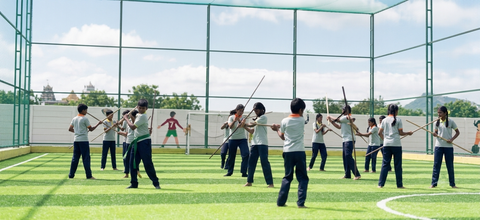
KG Admissions Open This Vijayadashami 2026-27 at Kovai Vidyashram Summary Vijayadashami marks the most auspicious beginning for a child’s education in Tamil culture, and Kovai Vidyashram opens KG admissions this season for 2026-27. This guide explains why the best CBSE School in Coimbatore is the right first step, what the KG programme offers, and what parents need to know before applying. Introduction In Tamil households, Vijayadashami carries a meaning that goes far beyond the calendar. It’s the day families choose to begin something meaningful. A first lesson. A new instrument. The start of a child’s formal education.  For generations, parents across Tamil Nadu have timed their children’s first school admission to this auspicious day, and for the 2026-27 academic year, Kovai Vidyashram is welcoming KG applications starting this Vijayadashami.  The Best CBSE School in Coimbatore for early childhood education combines this cultural tradition with a foundational learning programme designed to give every child the strongest possible start. This guide walks you through everything you need to know before the admission season closes. What Makes Vijayadashami the Right Time to Begin KG Admissions at Kovai Vidyashram? Vijayadashami is the right time to begin KG admissions because it aligns the cultural significance of a new beginning with the practical reality of school seat availability. Seats fill quickly, and families who start early secure the most options. Kovai Vidyashram has always welcomed Vijayadashami admissions precisely because it connects the school’s mission, building confident, well-rounded learners from the very beginning, with a moment that parents already associate with hope and new possibility. Kindergarten admissions in Coimbatore tend to see a significant surge around this period, so registering early ensures your child’s place in the 2026-27 cohort without the stress of last-minute availability. What Does the KG Programme at Kovai Vidyashram Actually Look Like? The KG programme at Kovai Vidyashram is built on a play-based learning approach that treats curiosity as the foundation of all early education. Children at this stage learn best through structured play, sensory exploration, and guided discovery, not rote repetition. The school’s early childhood framework draws from the Braindemics methodology, integrating cognitive development activities with physical movement, social interaction, and creative expression from day one. A typical KG day includes phonics and early literacy activities, number sense exercises, art and craft exploration, and guided outdoor play.  Each activity is carefully designed to build attention span, fine motor skills, and early problem-solving ability. This child-friendly school environment ensures that a child’s first experience of formal education feels safe, joyful, and genuinely engaging rather than overwhelming. According to research published by the National Institute for Early Education Research, children who attend high-quality early childhood programmes are significantly more likely to demonstrate strong reading and numeracy skills by Grade 3 compared to peers with limited pre-school exposure. Why Does the Best CBSE School in Coimbatore Matter Even at the KG Stage? Choosing the best CBSE School in Coimbatore at the KG stage matters because the foundational learning in primary school shapes how a child approaches every subject for the next twelve years. A weak foundation at this stage creates gaps that compound over time. Early childhood education in CBSE school systems is structured to align directly with the CBSE curriculum from Grade 1 onward. When a child’s KG experience is designed with that progression in mind, the transition from kindergarten to primary school feels natural rather than abrupt.  At Kovai Vidyashram, KG teachers are specifically trained in early childhood pedagogy and understand how to identify learning readiness, spot early developmental differences, and adjust their approach for each child individually. The school’s support and guidance systems extend into the KG years, ensuring that every child, regardless of their starting point, receives the right level of support and encouragement from day one. What Should Parents Know Before Applying for KG Admissions at Kovai Vidyashram? Parents should know that KG admissions at Kovai Vidyashram open formally this Vijayadashami and that the application process is straightforward, designed to be completed without unnecessary complexity. The school accepts children from Playgroup to LKG based on age eligibility. An interaction session with the child and parents forms part of the admission process, giving the school an opportunity to understand the child’s comfort level and giving the family a genuine feel for the environment.  The best KG school in Coimbatore doesn’t just check documents; it builds an early relationship with every family that joins its community. Kovai Vidyashram’s campus facilities, including dedicated early years classrooms, a safe outdoor play area, and age-appropriate learning materials, are all available for you to see during an admission visit. As explored in our earlier blog on the academic year overview for 2026-27, this year’s session is structured to give every new student a smooth, confident start. You can explore the full curriculum framework at Kovai Vidyashram to understand how the KG programme connects to every subsequent year of the child’s academic journey. Conclusion Vijayadashami is more than a date on the school admission calendar. For Tamil families, it’s a declaration that this beginning matters and that the right foundation is worth choosing carefully. Kovai Vidyashram, the best CBSE School in Coimbatore for early childhood education, opens its KG admissions this Vijayadashami with exactly that intention in mind. If you’re considering the right kindergarten admissions in Coimbatore for your child this season, the time to act is now. Seats for 2026-27 are limited, and the families who visit early make the most informed decisions. Schedule a campus visit at Kovai Vidyashram and give your child’s education the strongest possible start this Vijayadashami. Recent Posts Join with us Our Recent Blogs

Beyond the Classroom: Karate, Dance, Music & Chess at Kovai Vidyashram

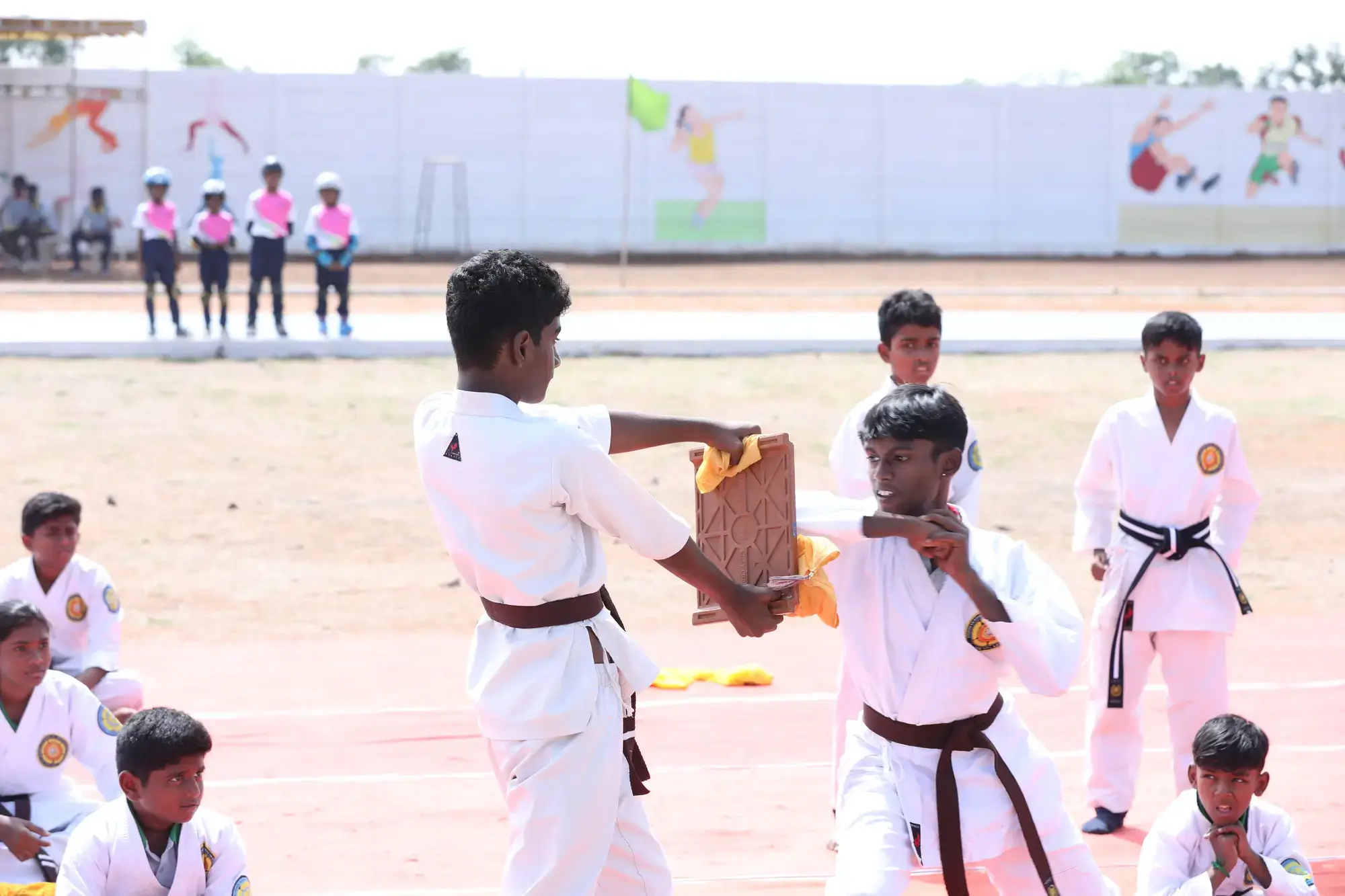
Beyond the Classroom: Karate, Dance, Music & Chess at Kovai Vidyashram Summary Strong extracurricular activities in CBSE School environments build discipline, creativity, and resilience alongside academics. This guide explores how Kovai Vidyashram’s Karate, Dance, Music, and Chess programmes drive holistic development and shape students who are as capable on a stage or a mat as they are in an exam hall. Introduction Ask any parent what they want for their child beyond good marks, and the answers are nearly always the same: confidence, discipline, creativity, and the ability to handle pressure. These qualities rarely develop inside a textbook. They form through experience, practice, and the kind of structured challenges that extracurricular activities in CBSE school environments are designed to deliver.  At Kovai Vidyashram, programmes in Karate, Dance, Music, and Chess are not optional weekend additions. They are woven into the school’s daily structure as core contributors to student development. What Do Karate, Dance, Music, and Chess at Kovai Vidyashram Actually Build in Students? These four programmes together cover the full spectrum of what holistic development in school actually looks like in practice. Each one targets a different dimension of a child’s growth, and together they create a student who is well-rounded in the truest sense. Karate builds physical discipline and mental focus. Dance develops expression and coordination. Music cultivates patience and emotional intelligence. Chess sharpens logical thinking and the ability to plan several moves ahead. None of these outcomes come from classroom instruction alone.  They come from showing up, practising under pressure, making mistakes in a structured environment, and improving over time. And the thing is every single one of those processes maps directly onto academic resilience too. How Does Karate Build Discipline and Focus in School Students? Karate builds discipline through martial arts training by demanding consistent practice, physical control, and respect for process above all else. There are no shortcuts to a belt, and students learn this quickly. A child who trains in Karate at Kovai Vidyashram doesn’t just learn kicks and blocks. She learns to follow instruction precisely, regulate her own energy, and stay focused through repetition.  According to research published by the Journal of Child and Family Studies, children who participate in structured martial arts training show significantly improved self-regulation and reduced impulsive behaviour compared to peers in non-structured activities.  These gains transfer directly into classroom attention span and the ability to stay calm during exams. The extracurricular activities at Kovai Vidyashram are structured to produce exactly these kinds of compound benefits, where physical training feeds cognitive and emotional growth simultaneously. Why Do Performing Arts Like Dance and Music Matter for Student Development? Performing arts in education matter because they give students a language for expressing what they feel before they have the words to say it. For children navigating the emotional complexity of school life, that outlet is genuinely valuable. At Kovai Vidyashram, students can choose from Classical Dance, Western Dance, Music, Keyboard, and Band, each offering a different emotional and creative experience. Consider a Grade 5 student who struggles to express himself verbally but finds a clear, confident voice through drumming.  As explored in our earlier blog on performing arts and student confidence, this impact extends well beyond the stage into every area of a student’s daily school experience. How Does Chess Develop Cognitive Skills and Academic Thinking? Chess develops cognitive skills through strategic thinking by training students to evaluate options, anticipate consequences, and make decisions under time pressure. These are precisely the mental habits that produce strong academic performance. A student who plays chess regularly learns to sit with uncertainty, think several steps ahead, and accept that one poor decision doesn’t end the game. That mental flexibility is exactly what strong exam performance requires.  The CBSE curriculum, with its emphasis on application-based learning and analytical reasoning, rewards exactly the kind of thinking that chess builds. Kovai Vidyashram’s chess programme, embedded within its broader co-curricular framework, gives students access to these cognitive benefits from the primary years onward. Conclusion Extracurricular activities in CBSE school environments are not distractions from academics. They are the training ground where life skills beyond academics are formed, practised, and eventually owned. Karate teaches discipline. Dance builds expression. Music sharpens memory and patience. Chess develops the analytical thinking that exams reward. At Kovai Vidyashram, all four are part of a deliberate approach to developing students who are genuinely capable in every dimension of their lives, not just within the exam hall. If you want to see how these programmes fit into the school’s daily rhythm, schedule a campus tour and experience the environment firsthand. Recent Posts Join with us Our Recent Blogs

Science & Computer Labs at Kovai Vidyashram: What Makes Them Different

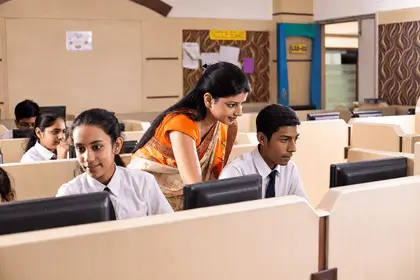
Science & Computer Labs at Kovai Vidyashram: What Makes Them Different Summary A lab is only as good as what happens inside it. This guide explores what makes the Science and Computer Labs at Kovai Vidyashram, the best CBSE School in Coimbatore, genuinely different, from hands-on learning to STEM-driven infrastructure that prepares students for real academic and career challenges. Introduction Open any school brochure and you’ll find the same line repeated: “well-equipped laboratories.” It’s one of the most common phrases in school marketing and one of the least informative.  The real question parents should be asking isn’t whether a school has labs. It’s what actually happens inside them.  At Kovai Vidyashram, widely recognised as the best CBSE School in Coimbatore, the Science and Computer Labs are designed around hands-on learning and practical science education. This guide takes you inside both lab environments to show exactly what makes them worth your attention. What Makes the Science and Computer Labs at Kovai Vidyashram Stand Out? The labs at Kovai Vidyashram stand out because they are built for active student use, not periodic demonstration. Every piece of equipment exists to give students direct, hands-on experience with the concepts they study in class. This distinction matters more than most parents realise.  Kovai Vidyashram structures its lab sessions so that every student, not just the front-row volunteers, handles equipment, records observations, and draws independent conclusions. That active participation turns theoretical knowledge into something students genuinely understand and remember. It’s a core part of what positions the school among the best CBSE Schools in Coimbatore for students aiming at science-based careers. How Do the Science Labs Support CBSE Curriculum and Competitive Exam Preparation? The Science labs support CBSE curriculum requirements directly while simultaneously building the practical science education foundation that NEET and JEE demand. These two goals are not separate at Kovai Vidyashram. They’re addressed in the same lab session. CBSE board exams include a practical component that contributes directly to a student’s final grade, and strong lab skills can make a measurable difference in that score. Beyond board exams, NEET Biology and JEE Physics and Chemistry both test conceptual understanding that forms far more clearly through experimentation than through textbook reading alone.  That experiential learning for students is what Kovai Vidyashram’s lab programme is designed to create consistently, not occasionally. You can explore how lab work integrates into the broader academic curriculum at KV to understand how each year builds practical competence progressively. What Does the Computer Lab at Kovai Vidyashram Actually Offer Students? The Computer Lab at Kovai Vidyashram offers students structured exposure to technology-driven classrooms and real coding practice from the primary years onward, not just treating digital literacy as a checkbox activity. Students work on individual systems rather than sharing screens, which means every child gets genuine practice time rather than watching a partner navigate the keyboard. The lab covers programming basics, data handling, and application skills that connect directly to the CBSE Information Technology and Computer Science curriculum.  According to the World Economic Forum’s Future of Jobs Report 2025, technological skills are projected to grow in importance more rapidly than any other skills category over the next five years, with AI, cybersecurity, and technological literacy topping the fastest-growing skills list.  Kovai Vidyashram’s computer lab programme is built with this trajectory in mind, ensuring students develop technology confidence through structured, curriculum-linked practice rather than ad hoc exposure. How Does Lab-Based Learning Prepare Students for Life Beyond School? Lab-based skill development prepares students for life beyond school by training them to observe carefully, hypothesise systematically, and accept that experiments don’t always produce expected results. That last point, learning to work with unexpected outcomes, is one of the most underrated skills a school can build. In a well-run STEM education environment, failure in a lab session is never wasted. A student whose titration produces the wrong endpoint doesn’t just redo the experiment. She identifies the variable that changed, adjusts her approach, and tries again. That process maps directly onto problem-solving in engineering, medicine, research, and business.  As explored in our earlier blog on AI based learning in school, the schools producing the most capable students are those that pair strong technology infrastructure with the kind of practical, application-based learning that labs uniquely provide. Both dimensions reinforce each other, and Kovai Vidyashram builds them together deliberately. Conclusion The best CBSE School in Coimbatore doesn’t just have Science and Computer Labs on the campus map. It uses them consistently, purposefully, and in direct alignment with what students need to perform well in board exams, competitive entrances, and careers. At Kovai Vidyashram, the labs are working spaces where students develop practical science skills, technology confidence, and the habit of learning by doing. These are not supplementary benefits but core to what makes the school’s academic programme genuinely stronger than a textbook-only approach. Schedule a campus tour and walk through the labs yourself. What you see will tell you far more than any brochure could. Recent Posts Join with us Our Recent Blogs
NEET & JEE Integrated Coaching from Grade 9: How Kovai Vidyashram Prepares Students Early

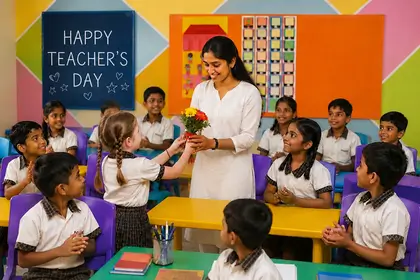
NEET & JEE Integrated Coaching from Grade 9: How Kovai Vidyashram Prepares Students Early Summary Starting competitive exam preparation in Grade 9 gives students a measurable academic edge. This guide explains how Kovai Vidyashram’s integrated NEET and JEE coaching in CBSE School builds subject foundations early, reducing pressure in the final years and increasing the chances of cracking two of India’s most competitive entrance exams. Introduction Most students begin preparing for NEET and JEE in Grade 11, leaving themselves just two years to cover an enormous syllabus while managing board exams simultaneously. That compressed timeline is one of the biggest reasons students burn out before they even sit the entrance exam.  Early competitive exam preparation changes this equation entirely. At Kovai Vidyashram, NEET and JEE coaching in CBSE School starts from Grade 9, giving students four full years to build subject depth, develop exam temperament, and arrive at the final stretch genuinely confident rather than overwhelmed. How Does Kovai Vidyashram’s Integrated Coaching from Grade 9 Prepare Students for NEET and JEE? Kovai Vidyashram integrates NEET and JEE coaching directly into the school timetable from Grade 9, so students build competitive exam foundations alongside their CBSE curriculum rather than separately from it. This is the key distinction. Most coaching models ask students to attend school during the day and sit through separate evening or weekend classes at an external centre. The fatigue that creates is real, and it affects both board performance and entrance exam preparation.  Kovai Vidyashram’s integrated approach removes that split entirely. Subject teachers align classroom instruction with entrance exam requirements from Grade 9 onward, introducing the conceptual depth that NEET and JEE demand without pulling students away from their regular school day. The result is a long-term academic strategy where every lesson serves two purposes at once. Why Does Starting NEET and JEE Coaching in CBSE School from Grade 9 Actually Matter? Starting early matters because NEET and JEE test conceptual understanding at a depth that two years of preparation simply cannot produce reliably.  Consider a student who first encounters organic chemistry concepts in Grade 9 rather than Grade 11. By the time the JEE syllabus formally introduces those topics, she has already seen them twice, applied them in internal assessments, and built an intuitive feel for how they connect to other areas of chemistry.  That familiarity reduces cognitive load during revision and allows her to focus on refining her speed and accuracy rather than learning fundamentals from scratch under pressure. How Does the CBSE Curriculum Align With NEET and JEE Preparation at KV? The CBSE curriculum and NEET alignment is stronger than most parents realise. The CBSE syllabus for Physics, Chemistry, Biology, and Mathematics from Grade 9 onward covers the foundational concepts that both entrance exams test directly. Kovai Vidyashram’s faculty use this alignment deliberately. Rather than treating board preparation and entrance exam preparation as two separate tracks, teachers connect CBSE concepts to their NEET and JEE applications in real time during classroom instruction.  A Grade 10 lesson on laws of motion, for instance, becomes the groundwork for JEE mechanics problems in Grade 12. This integrated teaching method builds engineering entrance exam readiness gradually and organically, without disrupting the school’s broader academic rhythm. You can explore how this approach fits into the school’s overall curriculum framework to understand how each academic year builds on the last. What Does Integrated Coaching Look Like Day-to-Day at Kovai Vidyashram? Day-to-day, integrated coaching at Kovai Vidyashram means structured additional sessions built into the school timetable, not bolted on after hours. Students in Grades 9 and 10 receive foundational concept reinforcement, while Grades 11 and 12 shift into full exam-mode preparation with mock tests, timed practice, and detailed performance analysis. The school’s support and guidance systems ensure that students who need extra help with specific topics get it through targeted mentoring rather than generic repeat classes. Faculty track each student’s progress across subjects and identify weak areas early, long before they become exam-day problems. This level of individual attention is exactly what school-based JEE coaching offers over large external coaching centres, where a student is one face among hundreds. As covered in our earlier blog on how KV prepares students for the CBSE 10th board exams, this personalised tracking approach runs consistently through every stage of the school’s academic programme. Conclusion NEET and JEE coaching in CBSE School works best when it starts early, and is integrated with regular classroom instruction rather than competing against it. Kovai Vidyashram’s Grade 9 integrated coaching model gives students exactly that: A four-year runway built on strong subject foundations, personalised mentoring, and a genuine long-term academic strategy. The students who crack NEET and JEE aren’t always the smartest in the room. They’re the most consistently prepared. If you want your child to walk into those exam halls ready, the time to start building that foundation is now. Schedule a campus tour at Kovai Vidyashram and speak with our academic team about the integrated coaching pathway. Recent Posts Join with us Our Recent Blogs
How Kovai Vidyashram Prepares Students to Excel in the CBSE 10th Board Exams

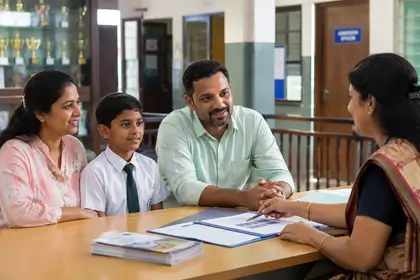
How Kovai Vidyashram Prepares Students to Excel in the CBSE 10th Board Exams Summary Board exam success depends on how a school structures revision, tracks progress, and supports students emotionally through a high-pressure year. This guide breaks down how Kovai Vidyashram, the best CBSE School in Coimbatore, prepares Grade 10 students for board exams by going beyond textbook coverage to genuine exam readiness. Introduction The CBSE Class 10 board exam is often the first major academic checkpoint a student faces, and how a school prepares them for it can shape their confidence for years afterward.  At Kovai Vidyashram, widely regarded as the best CBSE School in Coimbatore, that preparation begins long before the final revision weeks. It starts with structured planning, consistent assessment, and genuine mentoring built into the entire academic year. This guide walks through exactly how that preparation works, so you understand what real board exam readiness looks like from the inside. How Does Kovai Vidyashram Prepare Students to Excel in the CBSE 10th Board Exams? Kovai Vidyashram prepares Grade 10 students for board exams by starting structured exam readiness early, rather than cramming everything into the final term. The school treats the entire academic year as preparation, not just the months before the exam. This begins with a clear academic calendar that paces the syllabus to leave adequate time for revision, mock tests, and doubt-clearing sessions before the actual board exam. According to guidelines published by the CBSE itself, students perform significantly better when formative assessment is spread consistently across the year rather than concentrated only before final exams.  Kovai Vidyashram builds its internal assessment schedule around this exact principle, using periodic tests and unit assessments to track progress and flag weak areas months in advance, not weeks. What Role Does Structured Revision Play in Board Exam Success? Structured revision plays a central role because it transforms a year’s worth of learning into something a student can actually recall under exam pressure. Without it, even strong students struggle to retrieve information when it matters most. At Kovai Vidyashram, revision isn’t left to chance during the final stretch before exams. Teachers build subject-wise revision timetables, conduct full-length mock board exams under timed conditions, and provide detailed feedback on each attempt.  Consider a student who consistently loses marks in long-answer science questions despite knowing the concepts well. Through mock exams and targeted feedback, that same student learns to structure answers for maximum marks, a skill that has nothing to do with subject knowledge and everything to do with exam strategy. This kind of targeted preparation is part of the broader curriculum framework the school follows from the early years onward. By the time students reach Grade 10, they’ve already developed strong study habits and time management skills through years of consistent assessment, so the board exam feels like a continuation of familiar routines rather than an entirely new challenge. How Does the School Support Students Emotionally During Exam Season? Emotional support during exam season matters because exam stress, left unmanaged, undermines even the best academic preparation. A student who knows the material but panics during the exam often underperforms relative to their actual ability. Kovai Vidyashram’s support and guidance systems extend specifically into exam season, with counselors and mentors checking in with Grade 10 students individually as the board exams approach. Parents are also kept in the loop throughout this period, with regular updates on a student’s progress and areas needing attention. This open communication ensures that support at school is reinforced at home too, rather than the two environments working in isolation during the most stressful stretch of the academic year. Why Does Choosing the Best CBSE School in Coimbatore Matter for Board Exam Outcomes? Choosing the best CBSE School in Coimbatore matters because board exam outcomes depend heavily on consistent teaching quality, not just individual student effort. A school with experienced faculty, smaller class sizes, and genuine subject expertise gives every student a stronger foundation to work from. Kovai Vidyashram’s teaching faculty includes subject specialists who understand the CBSE marking scheme in detail and coach students specifically on how examiners evaluate answers.  As covered in our earlier blog exploring students who shine beyond the classroom, the confidence built through consistent achievement across academics and co-curriculars often translates directly into calmer, more capable exam performance. Conclusion Excelling in the CBSE Class 10 board exams comes down to consistent preparation, structured revision, and genuine emotional support woven through the entire academic year, not just the final weeks before the exam. Kovai Vidyashram builds all three into its approach deliberately. If you’re evaluating the best CBSE School in Coimbatore for your child’s board exam years, look closely at how a school structures its revision calendar and student support system, not just the past results. Schedule a campus tour at Kovai Vidyashram and see this preparation process firsthand. Recent Posts Join with us Our Recent Blogs

Understanding the Importance of AI in Education for Students and Teachers

Understanding the Importance of AI in Education for Students and Teachers Summary AI Based Learning in School helps personalise instruction for every student while giving teachers data-driven insight into progress and gaps. This guide explains why this shift matters now, and how schools like Kovai Vidyashram are putting it into practice. Introduction A classroom of 40 students learning at 40 different paces used to be an impossible problem for any single teacher to solve. That’s no longer entirely true. AI based learning in schools like Kovai Vidyashram is changing how concepts get taught, practised, and reinforced, giving every child a more personalised path through the curriculum.  This guide explains why AI matters in education today, for both students and teachers, and what that shift actually looks like inside a real classroom. What Is the Importance of AI in Education for Students and Teachers? AI in education matters because it solves a problem traditional teaching has always struggled with. For instance, it can meet every student exactly where they are. A single teacher cannot realistically track 40 individual learning curves in real time. AI tools can. For students, this means lessons that adapt based on how quickly they grasp a concept, with extra practice generated automatically when they struggle and harder material introduced when they’re ready. For teachers, it means access to data that used to take weeks of manual assessment to gather.  Research published by the Brookings Institution found that adaptive learning platforms can reduce the time students need to master a concept by up to 30% compared to one-size-fits-all instruction. That kind of efficiency frees up classroom time for deeper discussion, creativity, and the human connection that no algorithm can replace. This shift matters even more in a CBSE context, where the curriculum already expects students to apply concepts across subjects rather than simply memorise them. AI tools that reinforce weak areas in real time give students a stronger foundation to handle that kind of application-based learning with genuine confidence, rather than rote repetition alone. How Does AI Based Learning in School Actually Help Students Learn Better? AI based learning helps students learn better by identifying gaps in understanding before they widen into bigger problems. Instead of discovering a weak concept during a final exam, AI-powered tools flag it during routine practice, while there’s still time to fix it. Consider a Grade 8 student struggling silently with fractions for weeks. In a traditional setup, that gap might not surface until a test reveals it, by which point the student has fallen further behind. With AI-driven diagnostic tools, the same gap gets flagged within days, triggering targeted practice exercises before frustration sets in. This kind of early intervention protects both the student’s confidence and their academic momentum. Schools that integrate this technology thoughtfully alongside strong digital classroom infrastructure give students a genuine head start in building both competence and confidence. What Role Does AI Play in Supporting Teachers, Not Replacing Them? AI supports teachers by handling repetitive, time-consuming tasks so they can focus on what only humans do well like mentoring, motivating, and connecting with students. This distinction matters enormously, since many parents worry AI might reduce the role of a good teacher. Grading objective assessments, tracking attendance patterns, and generating practice question sets are exactly the kind of tasks AI handles efficiently, freeing teachers to spend more time on lesson design and one-on-one student support.  A good teacher still notices when a child seems distracted or upset, something no algorithm can detect. AI simply gives that teacher more time and better information to act on those observations. How Should Parents Think About AI Based Learning in School? Parents should think about AI based learning as a support system that strengthens, rather than substitutes for, good teaching and strong fundamentals. The goal isn’t screen time for its own sake. It’s smarter, more responsive learning. When evaluating a school’s approach to AI, ask how the technology is actually used in daily lessons, not just whether it exists. The strongest implementations pair AI tools with the kind of holistic curriculum that still prioritises critical thinking, creativity, and human interaction. As covered in our earlier blog on public speaking tips for students, the skills that matter most for a child’s future are communication, resilience, and confidence. They still require development through human guidance and real practice, with AI simply accelerating the academic foundation underneath. Conclusion AI based learning in school is not a passing trend. It’s a genuine shift in how students grasp concepts and how teachers identify and close learning gaps. The schools getting this right are the ones using AI to support strong teaching, not replace it. As classrooms continue to evolve through 2026 and beyond, the schools that combine smart technology with genuine human mentorship will consistently produce the most confident, capable students. Schedule a tour with Kovai Vidyashram and see this balance in action. Recent Posts Join with us Our Recent Blogs
How Performing Arts at Kovai Vidyashram Helps Children Grow in Confidence and Character

How Performing Arts at Kovai Vidyashram Helps Children Grow in Confidence and Character Summary Performing arts build confidence by giving children repeated, low-risk chances to perform, stumble, recover, and improve in front of others. This guide explores how performing arts at Kovai Vidyashram, a leading CBSE School in Coimbatore, help children build genuine confidence and strong character.  Introduction Watch a shy seven-year-old step onto a stage for the first time and you’ll see the exact moment confidence begins to form. Performing arts do that consistently, and the effect compounds over years. At Kovai Vidyashram, the best CBSE School in Coimbatore, dance, music, and drama are woven into daily school life precisely because they shape character in ways exam preparation alone cannot. This guide explains how that transformation actually happens and why performing arts deserve a serious place in your child’s education this year. How Does Performing Arts at Kovai Vidyashram Build Confidence and Character? Performing arts build confidence and character by placing children in situations where they must perform, recover, and improve in full view of others. That experience, repeated regularly, rewires how a child handles pressure in every part of life. A child who learns Bharatanatyam doesn’t just memorise steps. She learns to hold posture under scrutiny, recover gracefully from a missed beat, and present herself with composure in front of an audience.  According to research published by the National Association for Music Education in the United States, students engaged in structured performing arts programmes show measurably higher self-esteem and lower social anxiety compared to peers without similar exposure. That finding holds true well beyond the stage itself. It shows up in how a child answers a tough question in class or introduces themselves to a stranger. This kind of growth rarely happens overnight. It builds gradually, performance after performance, as a child learns that mistakes on stage are recoverable and even forgettable to the audience watching. That repeated exposure slowly dismantles the fear of judgement that holds many children back academically and socially. What Role Does Music and Dance Play in a Child’s Emotional Development? Music and dance give children a safe outlet to express emotions that words often struggle to capture. This emotional release plays a direct role in psychological wellbeing during the formative school years. At Kovai Vidyashram, students can choose from a wide range of co-curricular programmes, where each programme offers a different emotional and physical outlet. Consider a Grade 6 student who struggles with frustration in academic settings but channels that same intensity into a powerful classical dance performance during the Annual Day. That redirection of emotional energy into something constructive and admired builds genuine self-respect, the kind that carries into how a child treats setbacks elsewhere.  The school’s broader co-curricular framework is designed precisely to give every child multiple entry points into this kind of emotional and creative expression. Why Does Stage Experience Matter for Long-Term Character Development? Stage experience matters because it teaches resilience faster and more vividly than almost any other school activity. A missed line, a forgotten step, or a cracked note in front of an audience forces a child to either freeze or recover. Most children, with the right support, learn to recover. That single ability, recovering gracefully under public pressure, becomes one of the most transferable life skills a school can teach. It shows up later in job interviews, public presentations, and difficult conversations. Industry leaders at organisations like the World Economic Forum consistently rank resilience and adaptability among the top skills young professionals need for the future workforce. Schools that build this through regular performance opportunities, rather than occasional one-off events, give their students a genuine head start. This is part of why the best CBSE School in Coimbatore actively schedules frequent performance platforms throughout the year, not just during Annual Day. Morning assemblies, inter-house competitions, and cultural celebrations all become low-stakes practice grounds where children rehearse handling pressure long before it truly matters in adult life. How Does a Strong Arts Culture Strengthen the Whole School Community? A strong arts culture strengthens the school community by giving every student, regardless of academic strength, a meaningful way to contribute and be recognised. This inclusivity matters enormously for a child’s sense of belonging. At Kovai Vidyashram, students who may not top every subject often find their identity and confidence through music, dance, or drama instead. That recognition feeds back into classroom engagement and overall motivation. The school’s consistent extra-curricular achievements across district and state-level competitions reflect this culture in measurable terms. As our earlier blog on students who shine beyond the classroom explored, these achievements outside academics often shape a student’s confidence and character just as powerfully as their exam results. Conclusion Performing arts do something few other school activities can. They teach children to stand tall under pressure, express emotion constructively, and recover from mistakes with grace. These are the same qualities that define confidence. A CBSE School in Coimbatore that invests seriously in performing arts is investing directly in the character of its students, not just their talent. At Kovai Vidyashram, that investment shows up on stage, in the classroom, and in the quiet confidence each child carries forward. Schedule a campus tour and see this culture in action for yourself. Recent Posts Join with us Our Recent Blogs

An Overview at Kovai Vidyashram School – Academic Year 2026-2027

An Overview at Kovai Vidyashram School – Academic Year 2026-2027 Summary Choosing the right school shapes a child’s entire academic journey, and the start of a new session is the best time to take stock. This guide gives parents a complete overview of Kovai Vidyashram for the 2026-27 academic year, covering admissions, curriculum, facilities, and why it remains a strong choice among the best CBSE Schools in Coimbatore.  Introduction Choosing a school is one of the biggest decisions a parent makes, and the start of a new academic year is the perfect moment to take a fresh look at what a school actually offers. Admissions for 2026-27 are now open at Kovai Vidyashram, and the school continues to be recognised as the best CBSE School in Coimbatore for families seeking strong academics paired with genuine personal development.  This overview walks you through what the 2026-27 academic year looks like at Kovai Vidyashram, from curriculum structure to campus facilities, so you can make a confident decision for your child. What Is the Overview of Kovai Vidyashram for 2026-2027? The 2026-27 academic year at Kovai Vidyashram builds on a foundation the school has been refining since it began its journey in 2014. The session runs from April through March, covering Nursery to Grade 12, with structured academic streams in Science, Commerce, and Humanities available at the senior secondary level. What makes this year significant is the continued emphasis on activity-based, NEP-aligned learning across every grade. Classes are kept small, with a student-teacher ratio that allows genuine individual attention rather than mass instruction. For families researching the best CBSE School in Coimbatore, that ratio alone often becomes the deciding factor, since smaller classrooms consistently correlate with stronger learning outcomes according to research published by the National Council of Educational Research and Training. Admission registration for 2026-27 is already open across grades. Parents are encouraged to begin the enquiry process early, since seat availability tends to tighten as the academic year approaches, particularly at the Kindergarten and Grade 1 levels where intake is limited each year. How Does the Curriculum Prepare Students for the Year Ahead? The curriculum at Kovai Vidyashram is designed to prepare students for both board examinations and competitive entrance exams from an early stage. The CBSE framework aligns directly with national-level assessments, and the school adds integrated coaching for NEET and IIT-JEE starting in Grade 9, giving students a genuine head start. This year’s academic structure continues to combine conceptual teaching with practical application. Students in the primary years engage in play-way learning, phonics, and early numeracy, while middle and senior years shift toward analytical thinking and exam-oriented preparation. You can explore the full breakdown on the curriculum page to understand how each stage builds on the last. This structured progression is part of what consistently places Kovai Vidyashram among the best CBSE Schools in Coimbatore year after year. For senior secondary students, the 2026-27 session continues to offer Science, Commerce, and Humanities streams, giving families flexibility based on a child’s interests and career direction. What Facilities and Support Systems Are Available This Year? Campus facilities for 2026-27 include well-equipped science and computer labs, dedicated sports infrastructure, and a residential programme with separate boarding facilities for boys and girls. Round-the-clock CCTV surveillance, guarded entrances, and regular safety drills keep the campus secure throughout the year. Beyond infrastructure, the school’s support and guidance systems ensure that no student gets left behind academically or emotionally. Counsellors and mentors work alongside teachers to track each student’s progress individually. This matters because academic pressure tends to peak during board exam years, and having a structured support system in place from day one makes a measurable difference. As covered in our earlier blog on the role of the school library in academic success, these support systems extend into every corner of campus life, not just the classroom. Kovai Vidyashram remains a top choice because it consistently balances strong academics, genuine co-curricular depth, and a safe, well-managed campus. These are the three things that most schools struggle to combine. Conclusion The 2026-27 academic year at Kovai Vidyashram represents the same core philosophy the school has followed since 2014, which is to build strong academic foundations while developing confident, well-rounded young people. From curriculum depth to campus safety and co-curricular variety, this overview should give you a clear picture of what to expect this year. If you’re evaluating CBSE Schools in Coimbatore for your child’s admission, now is the right time to start the process. Schedule a campus tour at Kovai Vidyashram and see the 2026-27 academic environment firsthand. Recent Posts Join with us Our Recent Blogs
10 Powerful Public Speaking Tips for Students

10 Powerful Public Speaking Tips for Students Summary This guide shares 10 powerful public speaking tips for students, explaining why communication skills matter as much as academics and how the right school environment builds confident, stage-ready young speakers. Introduction Picture a student who scores full marks in English but freezes the moment she’s asked to speak in front of her class. Sound familiar? The good news is that public speaking is a skill, not a personality trait. It can be taught, practised, and genuinely mastered.  Kovai Vidyashram is one of the leading CBSE schools in Coimbatore that focuses on building confident communicators and is treated as seriously as building academic achievers. In this guide, you’ll find 10 practical public speaking tips that work for school students at every stage. Why Public Speaking Matters for Students Public speaking carries every other skill forward. A student who understands a concept but cannot express it clearly is at a real disadvantage, whether in a classroom discussion, a college interview, or a job presentation years later. According to a 2023 LinkedIn Workforce Confidence survey, verbal communication ranks as the number one soft skill employers look for in young professionals, ahead of technical knowledge. That finding should land hard for every parent evaluating what a school actually prepares a child for. The best CBSE school in Coimbatore recognises this and creates structured opportunities for students to speak, debate, present, and perform regularly, not just during Annual Day rehearsals. Confidence built on a school stage transfers directly into every area of a student’s life. It shapes how they ask questions in class, resolve conflicts with peers, and carry themselves in new environments. How Do You Overcome the Fear of Speaking in Public? Fear of public speaking shrinks when students replace avoidance with gradual, supported exposure. Readiness comes through doing, not waiting. Start small. Speaking to five classmates feels entirely different from addressing a full school assembly. Kovai Vidyashram’s co-curricular activity framework creates exactly this progressive exposure, from small group discussions in early years to inter-school competitions in senior classes. Each stage builds on the last, so students develop confidence through experience. What Are the Most Effective Public Speaking Tips for School Students? There are 10 public speaking tips that work in real school settings. Know your material, not just your script Students who memorise word-for-word panic when they lose their place. Understanding the topic deeply means you can recover naturally and speak with conviction. Make eye contact with three points in the room Pick a person on the left, one in the centre, one on the right. Rotate naturally. This creates connection without overwhelming a nervous speaker. Slow down deliberately Speed is the most common mistake young speakers make. Slowing down signals confidence and gives the audience time to absorb what you’re saying. Use pauses on purpose A two-second pause after a key point feels powerful to the audience, even when it feels awkward to the speaker. Silence commands attention. Practise out loud, not just in your head Mental rehearsal alone does not prepare the voice or the pacing. Speaking aloud in front of a mirror builds genuine muscle memory. Record yourself once It feels uncomfortable the first time. But watching a one-minute recording reveals habits, posture issues, and filler words you would never notice otherwise. Stand Confident Posture Feet shoulder-width apart, hands visible and natural. This prevents nervous swaying and fidgeting, which distract audiences and drain confidence. Structure every talk clearly Even a two-minute class presentation benefits from a simple structure: one opening hook, two or three points, one closing statement. Structure is your safety net. Embrace imperfection openly The most engaging student speakers recover from a mistake with a smile rather than freezing. Audiences always root for the speaker who keeps going. Speak regularly, in every format available Debates, elocutions, science presentations and group discussion, each format builds a different communication muscle. Explore the extracurricular opportunities at Kovai Vidyashram to see how many of these platforms are part of daily school life. How Does a School Environment Shape Communication Skills? A school shapes communication skills through daily, structured practice embedded into its culture. This is why choosing the right school matters as much as practising at home. Conclusion Public speaking tips work when practised consistently within a school that genuinely values communication as a core skill. Knowing the tips is the first step. Finding a school that gives your child the stage, the guidance, and the regular opportunity to use them is the second. At Kovai Vidyashram, students engage in Science and Eco Clubs, public speaking events, inter-school competitions, and performance-based experiences that require communicating ideas in front of real audiences. The support and guidance programme at KV ensures students who struggle with confidence receive personalised mentoring alongside peers. As our earlier blog on life skills explored, skills built outside academic hours often define a student’s long-term path. Recent Posts Join with us Our Recent Blogs

Alumni

Everything that I learned at Kempbelle University really helped put me above the competition in the field of business management.

Alyssa Watson
BA Business Management