Strong extracurricular activities in CBSE School environments build discipline, creativity, and resilience alongside academics. This guide explores how Kovai Vidyashram’s Karate, Dance, Music, and Chess programmes drive holistic development and shape students who are as capable on a stage or a mat as they are in an exam hall.
Introduction
Ask any parent what they want for their child beyond good marks, and the answers are nearly always the same: confidence, discipline, creativity, and the ability to handle pressure. These qualities rarely develop inside a textbook. They form through experience, practice, and the kind of structured challenges that extracurricular activities in CBSE school environments are designed to deliver.
At Kovai Vidyashram, programmes in Karate, Dance, Music, and Chess are not optional weekend additions. They are woven into the school’s daily structure as core contributors to student development.
What Do Karate, Dance, Music, and Chess at Kovai Vidyashram Actually Build in Students?
These four programmes together cover the full spectrum of what holistic development in school actually looks like in practice. Each one targets a different dimension of a child’s growth, and together they create a student who is well-rounded in the truest sense.
Karate builds physical discipline and mental focus. Dance develops expression and coordination. Music cultivates patience and emotional intelligence. Chess sharpens logical thinking and the ability to plan several moves ahead. None of these outcomes come from classroom instruction alone.
They come from showing up, practising under pressure, making mistakes in a structured environment, and improving over time. And the thing is every single one of those processes maps directly onto academic resilience too.
How Does Karate Build Discipline and Focus in School Students?
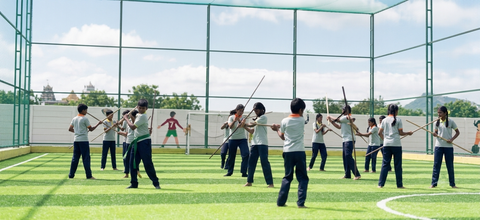
Karate builds discipline through martial arts training by demanding consistent practice, physical control, and respect for process above all else. There are no shortcuts to a belt, and students learn this quickly.
A child who trains in Karate at Kovai Vidyashram doesn’t just learn kicks and blocks. She learns to follow instruction precisely, regulate her own energy, and stay focused through repetition.
According to research published by the Journal of Child and Family Studies, children who participate in structured martial arts training show significantly improved self-regulation and reduced impulsive behaviour compared to peers in non-structured activities.
These gains transfer directly into classroom attention span and the ability to stay calm during exams. Theextracurricular activities at Kovai Vidyashram are structured to produce exactly these kinds of compound benefits, where physical training feeds cognitive and emotional growth simultaneously.
Why Do Performing Arts Like Dance and Music Matter for Student Development?
Performing arts in education matter because they give students a language for expressing what they feel before they have the words to say it. For children navigating the emotional complexity of school life, that outlet is genuinely valuable.
At Kovai Vidyashram, students can choose from Classical Dance, Western Dance, Music, Keyboard, and Band, each offering a different emotional and creative experience. Consider a Grade 5 student who struggles to express himself verbally but finds a clear, confident voice through drumming.
As explored in our earlier blog onperforming arts and student confidence, this impact extends well beyond the stage into every area of a student’s daily school experience.
How Does Chess Develop Cognitive Skills and Academic Thinking?
Chess develops cognitive skills through strategic thinking by training students to evaluate options, anticipate consequences, and make decisions under time pressure. These are precisely the mental habits that produce strong academic performance.
A student who plays chess regularly learns to sit with uncertainty, think several steps ahead, and accept that one poor decision doesn’t end the game. That mental flexibility is exactly what strong exam performance requires.
The CBSE curriculum, with its emphasis on application-based learning and analytical reasoning, rewards exactly the kind of thinking that chess builds. Kovai Vidyashram’s chess programme, embedded within its broaderco-curricular framework, gives students access to these cognitive benefits from the primary years onward.
Conclusion
Extracurricular activities in CBSE school environments are not distractions from academics. They are the training ground where life skills beyond academics are formed, practised, and eventually owned. Karate teaches discipline. Dance builds expression. Music sharpens memory and patience. Chess develops the analytical thinking that exams reward.
At Kovai Vidyashram, all four are part of a deliberate approach to developing students who are genuinely capable in every dimension of their lives, not just within the exam hall. If you want to see how these programmes fit into the school’s daily rhythm,schedule a campus tour and experience the environment firsthand.