Kovai Vidyashram

Why Playtime is Important for Early Childhood Learning

Introduction

In today’s busy world, parents often feel pressure. We want our young children to learn letters, numbers, and get ready for school. Sometimes, it feels like every minute needs to be filled with “learning activities.” But what if one of the most powerful learning tools is something kids already love to do? We’re talking about play!

Many people see playtime as just fun, a break from real learning. However, experts in child development tell us something different. Play is not just a break; it is learning. It’s how young children naturally explore, understand, and make sense of the world around them. This blog post will explore why playtime is so incredibly important for early childhood learning. We’ll look at how it helps children grow their minds, understand feelings, build strong bodies, and become creative thinkers. Let’s dive into the amazing power of play.

What Do We Mean By Play?

When we talk about play in early childhood, we mean activities that are chosen and led by the child. It’s usually fun, voluntary, and more focused on the doing than on a final product. Think about a child building a tower with blocks just for the joy of building, or pretending to be a superhero saving the day. That’s play! It might look simple, but incredible amounts of learning are happening beneath the surface.

The Amazing Benefits: Why Play is So Important

Play touches every part of a child’s development. It’s not just one benefit; it’s a whole package that helps kids thrive. Let’s break down the key areas where play makes a huge difference.

Building Brainpower: How Play Helps Thinking Skills

Play is like exercise for a child’s brain. When children play, they are constantly thinking, solving problems, and making decisions.

Problem-Solving: Imagine a child trying to build a bridge with blocks that keep falling down. They try different ways, test ideas, and learn what works. This is problem-solving in action! Puzzles, shape sorters, and even figuring out how to share a toy involve critical thinking.

  • Focus and Attention: While deeply involved in a play activity they enjoy, children learn to concentrate for longer periods. This ability to focus is crucial for later learning in school.
  • Early Math Ideas: Play is full of math! Counting blocks, sorting toys by colour or size, understanding shapes (“pass me the round one”), and figuring out spatial relationships (fitting puzzle pieces together) all build a foundation for mathematical thinking.
  • Memory: Remembering the rules of a simple game or recalling steps in pretend play (like making pretend food) helps strengthen memory skills.
  • Making Choices: Free play allows children to decide what to do, how to do it, and when to change activities. This builds independence and decision-making skills.

Growing Hearts: Play and Social-Emotional Skills

Learning how to get along with others and manage feelings is a huge part of growing up. Play is the perfect practice ground for these essential life skills.

  • Learning to Share and Cooperate: Playing with other children means learning to take turns, share toys, and work together towards a common goal, like building a fort or playing a group game. These are vital social skills.
  • Understanding Others’ Feelings (Empathy): Through pretend play, children step into different roles, maybe a doctor helping a patient or a parent caring for a baby. This helps them imagine how others might feel, which builds empathy.
  • Managing Emotions: Play can sometimes lead to frustration (like the block tower falling!). It provides safe opportunities for children to experience emotions like disappointment or excitement and learn how to handle them with support from adults or peers.
  • Building Confidence: When a child successfully builds something, solves a puzzle, or makes a friend during play, it boosts their self-esteem and confidence. They learn they are capable.
  • Communication: Playing with others involves talking, listening, negotiating (“Can I have a turn next?”), and expressing ideas.

Strong Bodies, Active Minds: Physical Development Through Play

Play gets kids moving! This physical activity is essential for their growing bodies and has benefits for their brains, too.

  • Gross Motor Skills: Running, jumping, climbing, throwing a ball, these activities use the large muscles in the arms, legs, and torso. Outdoor play is especially great for developing these gross motor skills, improving balance and coordination.
  • Fine Motor Skills: Many play activities help develop the small muscles in the hands and fingers. Think about drawing with crayons, building with small LEGO, dressing dolls, or pouring sand. These fine motor skills are needed later for writing and using tools.

Healthy Habits: Active play helps children develop healthy bodies and can establish a positive attitude towards physical activity early in life. Movement also helps children get their wiggles out, which can improve focus during quieter times.

Sparking Bright Ideas: Play Fuels Creativity and Imagination

Imagination is a powerful tool. Play is where children let their creativity run wild.

  • Thinking Outside the Box: A simple cardboard box can become a car, a house, or a spaceship in a child’s imagination. Play encourages children to see possibilities and think creatively, using objects in new and inventive ways.
  • Storytelling and Role-Playing: Pretend play allows children to create their own stories, characters, and scenarios. This fosters imagination and narrative skills, which are linked to literacy development.
  • Experimentation: Play is a safe space to try new things without fear of failure. Children experiment with materials, ideas, and social interactions, leading to innovation and learning.

Finding Their Voice: Language and Communication Grow with Play

Play is a language-rich activity. Children talk, listen, and learn new words constantly while playing.

  • Vocabulary Growth: While playing, children hear and use new words related to their play theme (e.g., “stethoscope” during doctor play, “ingredients” during cooking play).
  • Conversation Practice: Playing with peers or adults involves back-and-forth conversation, asking questions, and explaining ideas. This builds conversational skills.
  • Understanding Language: Listening to stories during pretend play or following instructions in a game helps children improve their understanding of language.

Different Kinds of Play Matter

Play isn’t just one thing. Different types of play offer unique benefits:

  • Free Play: Child-led play where kids choose what and how to play. Crucial for independence and creativity
  • Guided Play: Adults gently support or extend the child’s play, perhaps by asking questions or introducing new materials.
  • Outdoor Play: Offers space for big movements, connection with nature, and sensory experiences.
  • Pretend/Dramatic Play: Powerful for social, emotional, and language development.
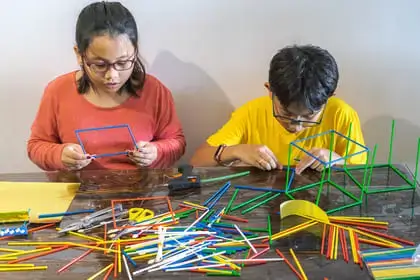
  • Constructive Play: Building with blocks, drawing, and making things. Great for problem-solving and fine motor skills.

Object Play: Exploring toys and objects to learn how they work.

How Adults Can Support Powerful Play?

Adults play a key role, not by directing, but by supporting. Here’s how:

  • Make Time for Play: Ensure children have unstructured time each day dedicated to play.
  • Create a Playful Space: Offer safe areas with a variety of open-ended materials (blocks, art supplies, dress-up clothes, natural items). Open-ended means they can be used in many ways.
  • Observe and Appreciate: Watch children play to understand their interests and thinking. Value their play process.
  • Follow Their Lead: Join in if invited, but let the child direct the play. Avoid taking over.
  • Ask Open-Ended Questions: Instead of testing (“What colour is that?”), ask questions that encourage thinking (“What are you building there?” “What do you think will happen if…?”).
  • Limit Screen Time: Ensure a healthy balance, as excessive passive screen time can take away from active, hands-on play.

Connecting Play to School Readiness

All these skills developed through play, problem-solving, focus, social skills, creativity, and language are exactly what children need to succeed in school and life. When children enter school with a strong foundation built through play, they are often more ready to learn, more curious, and better able to manage the classroom environment.

Choosing the right learning environment for continued growth is important. Parents looking for quality education, perhaps considering options like a CBSE School in Coimbatore, often look for institutions that understand and value this foundation. The Best CBSE school in Coimbatore, for instance, would ideally recognise that integrating play-based learning principles, especially in the early years, supports deeper understanding and prepares children effectively for more formal academics later on. They understand that play isn’t the opposite of learning; it’s the engine driving it in early childhood.

Conclusion

Play is far more than just a way for children to pass the time. It is a fundamental human need and a powerful engine for learning and development in early childhood. Through play, children build critical cognitive skills, learn to navigate social situations, develop physically, spark their creativity, and enhance their language abilities.

So, let’s celebrate and encourage play! Provide the time, space, and simple materials children need. Trust in the power of their explorations and creations. By valuing play, we give our children the best possible start for a lifetime of learning and discovery. Let them play, it’s the most important work they can do right now. What are your favourite ways to encourage play?

Recent Posts

Join with us

Alumni

Everything that I learned at Kempbelle University really helped put me above the competition in the field of business management.

Alyssa Watson
BA Business Management